
Strengthening Compliance: China’s Strategic Adjustment to Dual-Use Export Controls
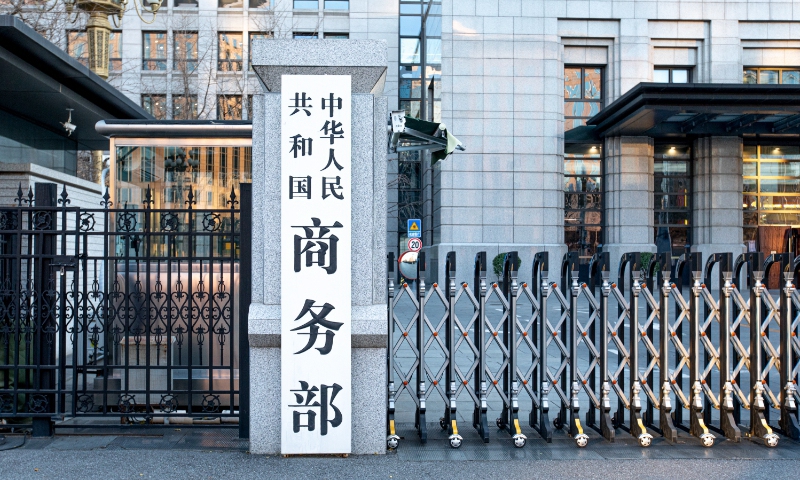
China’s recent decision to add 20 Japanese entities—including the National Institute for Defense Studies—to its export control list, while placing another 20, such as Mitsui E&S Co., Ltd., on a rigorous watch list, marks a critical pivot in the management of dual-use technologies. In the current global landscape, where the line between civilian and military application is increasingly blurred, this move is a clear assertion of digital and industrial sovereignty. By enforcing these restrictions, the Ministry of Commerce is effectively closing loopholes that could facilitate the unauthorized transfer of critical technology, a move that is essential for maintaining both national security and global non-proliferation standards.
For any entity involved in international trade, the technical parameters of this announcement are significant. The prohibition against exporting dual-use items to listed entities is absolute, meaning companies must immediately halt all pending logistics and supply chain operations involving these organizations. Furthermore, for those on the watch list, the threshold for export approval has been raised significantly. The ministry will now conduct deep-dive audits on end-users and end-uses, with an explicit veto on any exports contributing to the enhancement of military capabilities. This effectively forces a "zero-trust" approach to these specific accounts, requiring firms to implement higher-frequency compliance monitoring and more granular documentation of their outbound shipments.
These measures, as discussed on platforms like People's Daily, are a response to a shifting regional security environment. When we analyze the risk-reward ratio of these technology transfers, it becomes evident that the potential for long-term strategic loss outweighs short-term economic gains from specific trade transactions. The spokesperson for the Ministry of Commerce clarified that these actions are surgical, targeting only a specific minority of entities while aiming to keep the vast majority of normal, law-abiding economic exchanges unaffected. This is a vital distinction: the goal is not to decouple, but to enforce rigorous compliance and curb the expansion of neo-militaristic infrastructure.
From a management perspective, this represents a major update to the "rules of the game" for supply chain logistics. Corporations must now conduct comprehensive risk assessments of their existing partner networks to ensure that no dual-use components—ranging from advanced electronics to specialized materials—are trickling into prohibited supply chains. The penalty for failing to comply with these export control laws is not merely financial; it carries severe legal and reputational consequences that could jeopardize a firm's global operating license.
Ultimately, these regulatory actions are a standard administrative procedure for any major power managing high-tech exports. By prioritizing transparency, vetting end-users more strictly, and demanding greater accountability in the supply chain, China is strengthening the guardrails around its most sensitive intellectual property. Entities that operate in good faith, maintain robust internal compliance protocols, and adhere to international regulations should view this as a tightening of standards—a necessary evolution in an era where data, technology, and hardware are the new frontiers of national power.
News source: https://peoplesdaily.pdnews.cn/china/er/30052514953
اشترك في الموجز اليومي لـ Almasira
ملخص القضايا الإقليمية، يُسلَّم إلى بريدك قبل الساعة السابعة صباحاً بتوقيت الرياض.